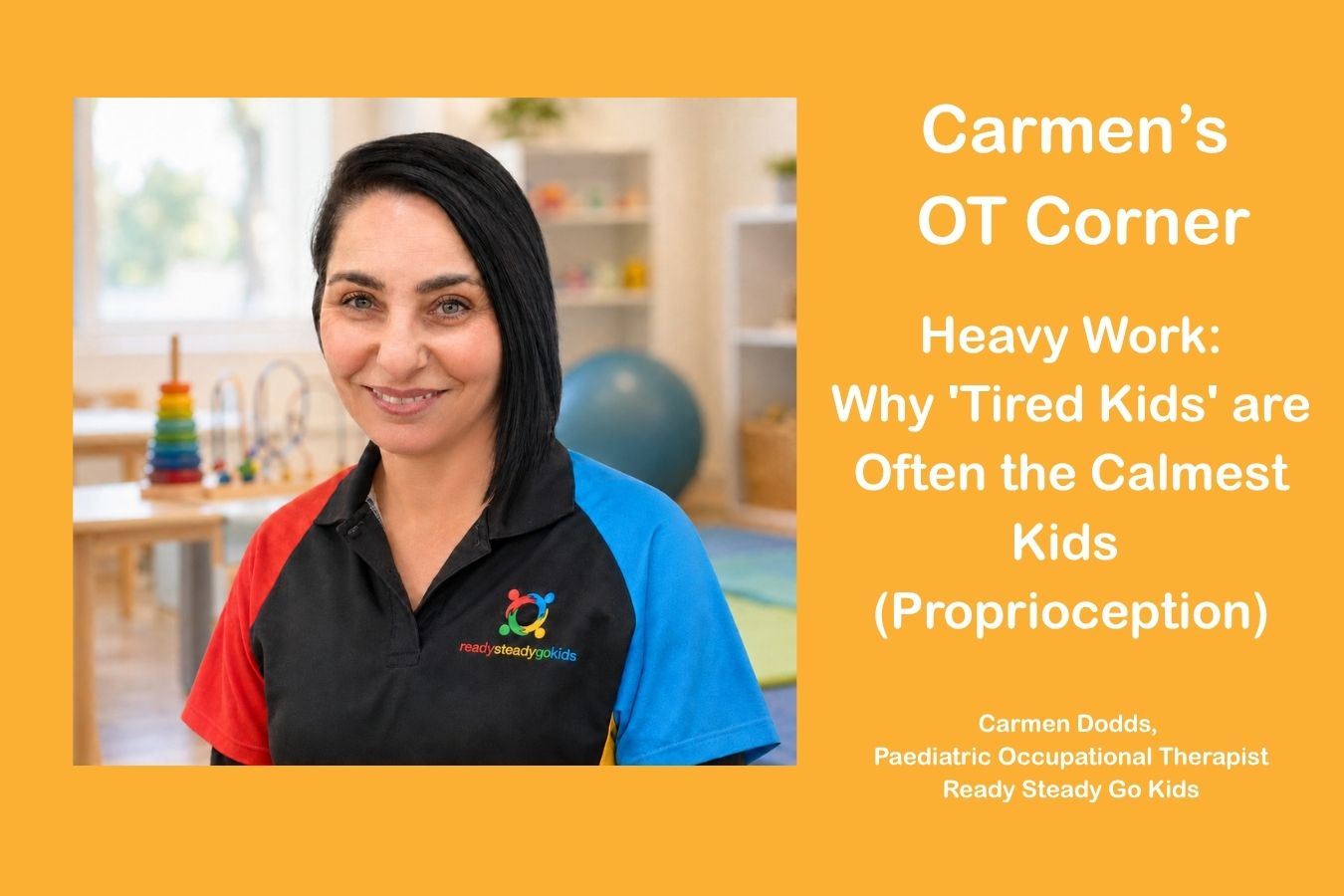
Carmen's Corner: Heavy Work: Why 'Tired Kids' are Often the Calmest Kids (Proprioception)
Ever noticed your little one is somehow more settled after a big play session at the park? Or that your usually bouncy preschooler sits calmly at dinner after helping you carry the shopping bags inside?
You're not imagining it. There's real science behind why "tired kids" are often the calmest kids: and it all comes down to something called proprioception.
What on Earth is Proprioception?
Proprioception is the body's ability to sense its own position in space and understand the effort being used in movement. Think of it as your child's internal GPS: helping them know where their arms and legs are without having to look at them.
This sense works through receptors in muscles, joints, and ligaments that constantly send feedback to the brain about movement and force.
"Proprioception is like the body's secret communication system," says Carmen Dodds, in-house Occupational Therapist at Ready Steady Go Kids. "When children receive strong input through their muscles and joints, it helps their nervous system feel grounded and organised. That's why we see such positive changes in focus and behaviour after physical activity."
Heavy Work: The Regulation Game-Changer
Heavy work refers to activities that involve pushing, pulling, lifting, or carrying: anything that provides resistance to the muscles and joints. This type of input is naturally calming and organising to a child's sensory system.
The benefits include:
- Improved focus and attention
- Better body awareness and coordination
- Enhanced self-regulation during transitions
- Increased ability to sit still
- Overall nervous system balance
For children who seek constant movement or struggle with sensory processing, heavy work can be particularly effective.
Safe Heavy Work Activities to Try at Home
Parents can incorporate heavy work into daily routines without any special equipment:
- Carrying groceries : Let your little one help with lighter bags
- Wheelbarrow walks : Hold their legs while they walk on their hands
- Wall push-ups : Great before homework or quiet time
- Tug-of-war : Using a towel or rope
- Climbing : Playground equipment or safe indoor options
- Jumping : On a trampoline or cushions
These activities work best when used strategically: before transitions, during homework time, or when frustration starts building.
How Ready Steady Go Kids Supports Proprioceptive Development
At Ready Steady Go Kids, our multi-sport classes naturally incorporate heavy work through activities like climbing, jumping, crawling through obstacle courses, and carrying equipment.
"What I love about the RSGK program is that children get this essential proprioceptive input while having fun," explains Carmen. "They're building the foundations for classroom readiness: better attention, calmer bodies, improved coordination: without even realising it. It's purposeful play at its best."
The structured yet playful environment means children receive consistent, beneficial input each week: supporting their regulation both during class and in the hours that follow.
The Bottom Line
That post-activity calm you notice in your child isn't just exhaustion. It's their nervous system responding to meaningful sensory input that helps them feel centred, focused, and ready to take on the world.
Heavy work is one of the simplest, most effective tools in your parenting toolkit.
If you want to check out a class and see the benefits for yourself, book a FREE TRIAL.