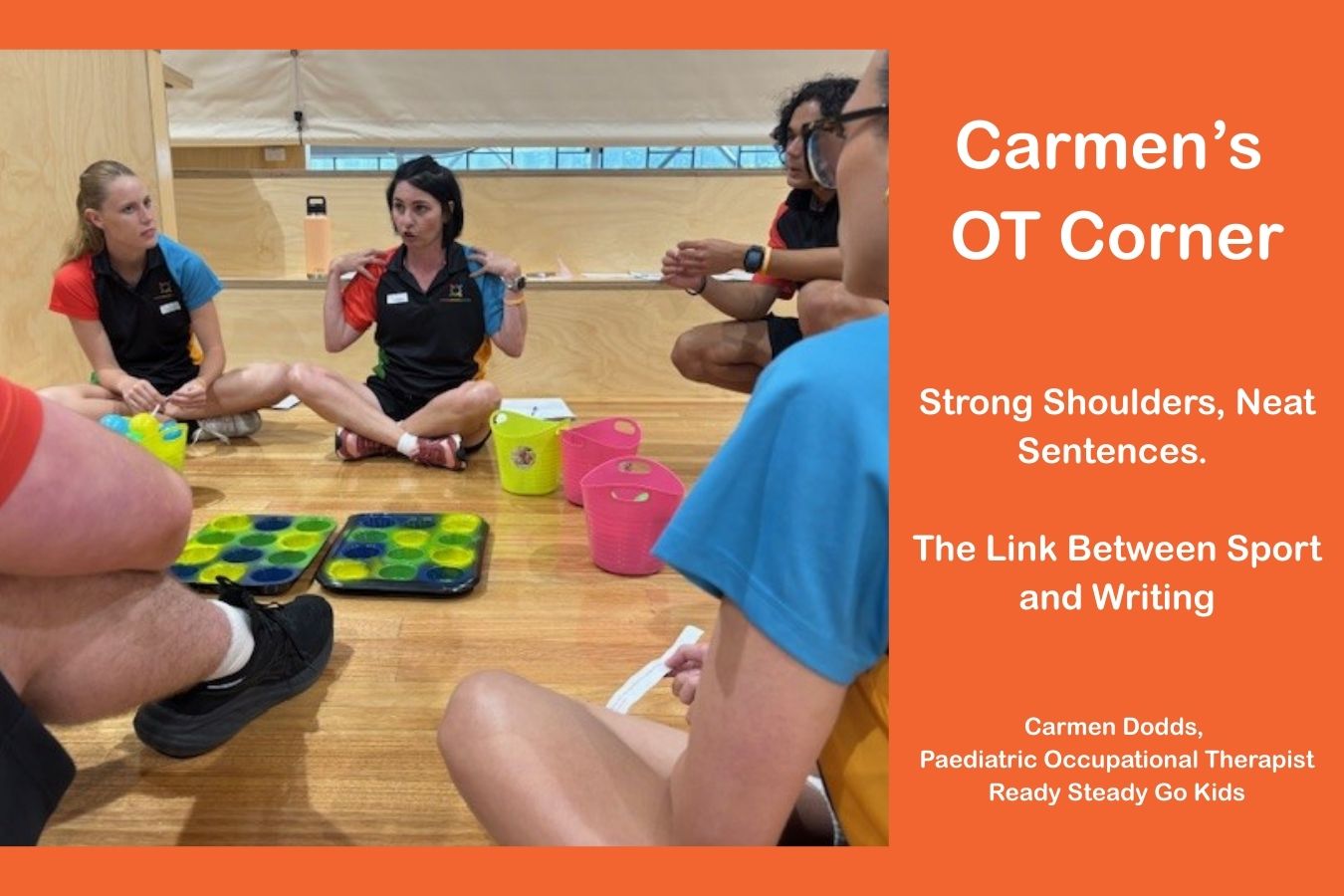
Carmen's Corner - Strong Shoulders, Neat Sentences, The Link Between Sport and Writing
Strong Shoulders, Neat Sentences, The Link Between Sport
and Writing
Ever watched your little one grip a pencil like they're
trying to wrestle it into submission? Or noticed their handwriting looks more
like a seismograph reading than actual letters?
Before you stock up on more handwriting worksheets (and
another coffee), consider this: the secret to neater sentences might not start
at the desk. It starts at the shoulders.
The Foundation You Never Knew About
Here's a truth that surprises many parents: handwriting is a
whole-body skill. Those tiny finger movements required to form letters depend
on a stable foundation, and that foundation begins with the shoulder girdle.
Think of it like building a house. You wouldn't expect walls
to stay upright without solid footings. Similarly, children can't develop the
fine motor control needed for writing without first establishing strength and
stability in their larger muscle groups.
"When we see children struggling with pencil
grip or letter formation, one of the first things we assess as Occupational
Therapists is proximal stability, particularly around the shoulder blade and
shoulder joint. Without that strong base, the hand and fingers have to work
overtime, leading to fatigue, frustration, and messy handwriting." Carmen Dodds, Occupational Therapist
Why Shoulders Matter for School Success
The technical term is "proximal stability for distal
mobility." In plain English: strong shoulders allow for controlled hand
movements.
When children throw balls, hang from monkey bars, crawl
through tunnels, or push themselves up from the ground, they're building the
scapular (shoulder blade) strength that directly supports writing readiness.
Children with underdeveloped shoulder stability often:
- Tire
quickly during writing tasks
- Press
too hard or too soft with their pencil
- Struggle
to stay within lines
- Slump over their desk or prop their head with their non-writing hand
Where Sport Comes In
This is where structured physical activity becomes more than
just "burning off energy" (though we know you appreciate that benefit
too, especially by 5pm).
Multi-sport programs that incorporate throwing, catching,
climbing, and weight-bearing activities systematically build the upper body
strength children need, long before they're expected to write paragraphs.
And it is not just the big, obvious movements either. Just
lifting the T-ball bat and keeping the tennis racquet upright for volleys is
working on the shoulder girdle strength needed to support intrinsic finger
strength to hold and manipulate a pencil!
"Parents often ask what they can do at home to improve handwriting. My first recommendation is always movement. Activities like throwing overarm, wheelbarrow walks, and playing int the playground - climbing play equipment; using the monkey bars and yes….climbing up a slide - all strengthen the shoulder girdle. It's laying the groundwork for classroom success without children even realising they're 'working' on anything." Carmen Dodds, Occupational Therapist
How Ready Steady Go Kids Supports Writing Readiness
At Ready
Steady Go Kids, our multi-sport classes are designed with child development
at the core. Each week, children rotate through different sports, many of which
naturally target upper body and shoulder strength:
- Throwing
and catching (basketball, footy/rugby, T-ball, cricket)
- Striking
& batting sports (hockey,
golf, tennis)
- Pushing and pulling movements (warm-up
activities and stretches)
- Balancing and climbing
challenges (obstacle
courses & gross motor games)
These aren't random activities. They're building blocks for
school readiness, including the physical foundations required for handwriting.
The Bigger Picture
Strong
shoulders support more than neat sentences. They contribute to:
- Better posture at the desk resulting in better focus to task and a strong ability to learn new things
- Increased
endurance for classroom tasks
- Improved
confidence in physical activities
- Reduced
frustration during fine motor tasks
And here's a bonus: while your child builds these essential
skills, you get to connect with other parents who also understand the chaos of
raising little humans. (Yes, we see you with the cold coffee.)
Ready to See the Benefits?
If you want to check out a class and see the benefits for
yourself, book a FREE TRIAL.
Your child gets to burn energy and have fun
whilst learning the fundamental skills needed to play a
sport. You get a front-row seat to watching their development
unfold: one strong shoulder at a time.