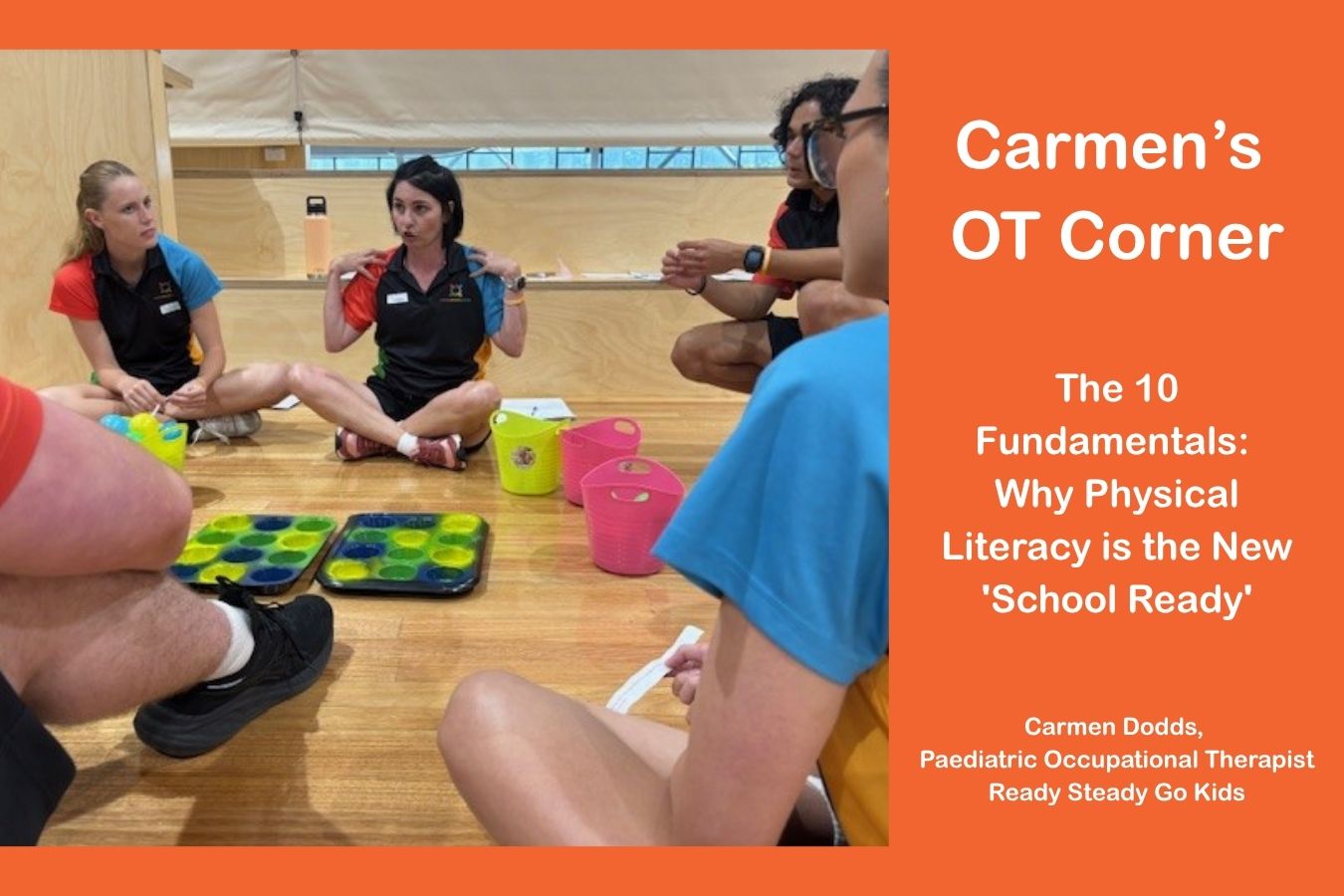
Carmen's Corner: The 10 Fundamentals: Why Physical Literacy is the New 'School Ready'
Forget flashcards. Forget drilling the alphabet at age three. The latest research in child development points to something far more foundational for school success: and it happens on the playground, not at the desk.
Physical literacy is emerging as the ultimate "school readiness" indicator, and understanding why could change how you prepare your little one for their first day of big school.
What Is Physical Literacy?
Physical literacy refers to the combination of fundamental movement skills, confidence, motivation, and knowledge that enables children to engage in physical activity throughout their lives. It's not about being "sporty": it's about building the physical foundations that support every other area of development.
At its core are the 10 fundamental movement skills:
- Running
- Jumping
- Hopping
- Galloping
- Skipping
- Balancing
- Catching
- Throwing
- Kicking
- Striking
These aren't just playground activities. They're the building blocks for coordination, body awareness, and: crucially: classroom learning.
The School Readiness Connection
Here's where it gets interesting for parents counting down to kindy.
Children who develop strong fundamental movement skills demonstrate better attention spans, improved fine motor control (hello, pencil grip), and enhanced cognitive function. The body and brain aren't separate systems: they're deeply interconnected.
"Physical literacy is the foundation upon which academic learning is built. When a child can coordinate their body confidently, they're developing the neural pathways that support concentration, problem-solving, and even reading comprehension. It's not separate from 'school skills': it IS a school skill."
Carmen Dodds, Occupational Therapist, Ready Steady Go Kids
Research indicates that confidence in movement settings as an adult most often develops from learning a range of specific movement skills as a child. This means the investment you make now pays dividends for decades.
Why Traditional "School Prep" Misses the Mark
Many parents focus heavily on academic preparation: letters, numbers, colours. These matter, but they're only part of the picture.
A child who can't sit still, struggles to hold a pencil, or has difficulty following multi-step instructions may be experiencing gaps in their physical development, not their intellectual capacity.
Consider this checklist of physical literacy markers for school readiness:
- Can cross the midline (reach across the body)
- Demonstrates bilateral coordination (using both hands together)
- Shows adequate core strength for seated tasks
- Exhibits balance and spatial awareness
- Possesses hand-eye coordination for writing and cutting
"I often see children referred for attention or learning concerns when the underlying issue is actually physical development. Once we address the movement foundations, the classroom challenges often resolve themselves. Physical literacy isn't a 'nice to have': it's essential."
Carmen Dodds, Occupational Therapist, Ready Steady Go Kids
How RSGK Supports Physical Literacy Development
At Ready Steady Go Kids, every class is designed around building these 10 fundamental movement skills in age-appropriate, engaging ways.
Children rotate through 10 different sports each term, ensuring exposure to running, jumping, throwing, catching, kicking, and striking in varied contexts. This multi-sport approach builds well-rounded physical literacy rather than early specialisation.
The program also creates connection opportunities for parents. Between coffee-fuelled sideline chats and shared celebrations of little wins, many mums and dads find their own community while their children develop crucial skills.
The Bottom Line
School readiness isn't just about knowing the alphabet. It's about having a body that's ready to learn: one that can sit, focus, coordinate, and engage.
Physical literacy provides that foundation.
If you want to check out a class and see the benefits for yourself, book a FREE TRIAL.
Your child's brain will thank you. And so will their future teacher.