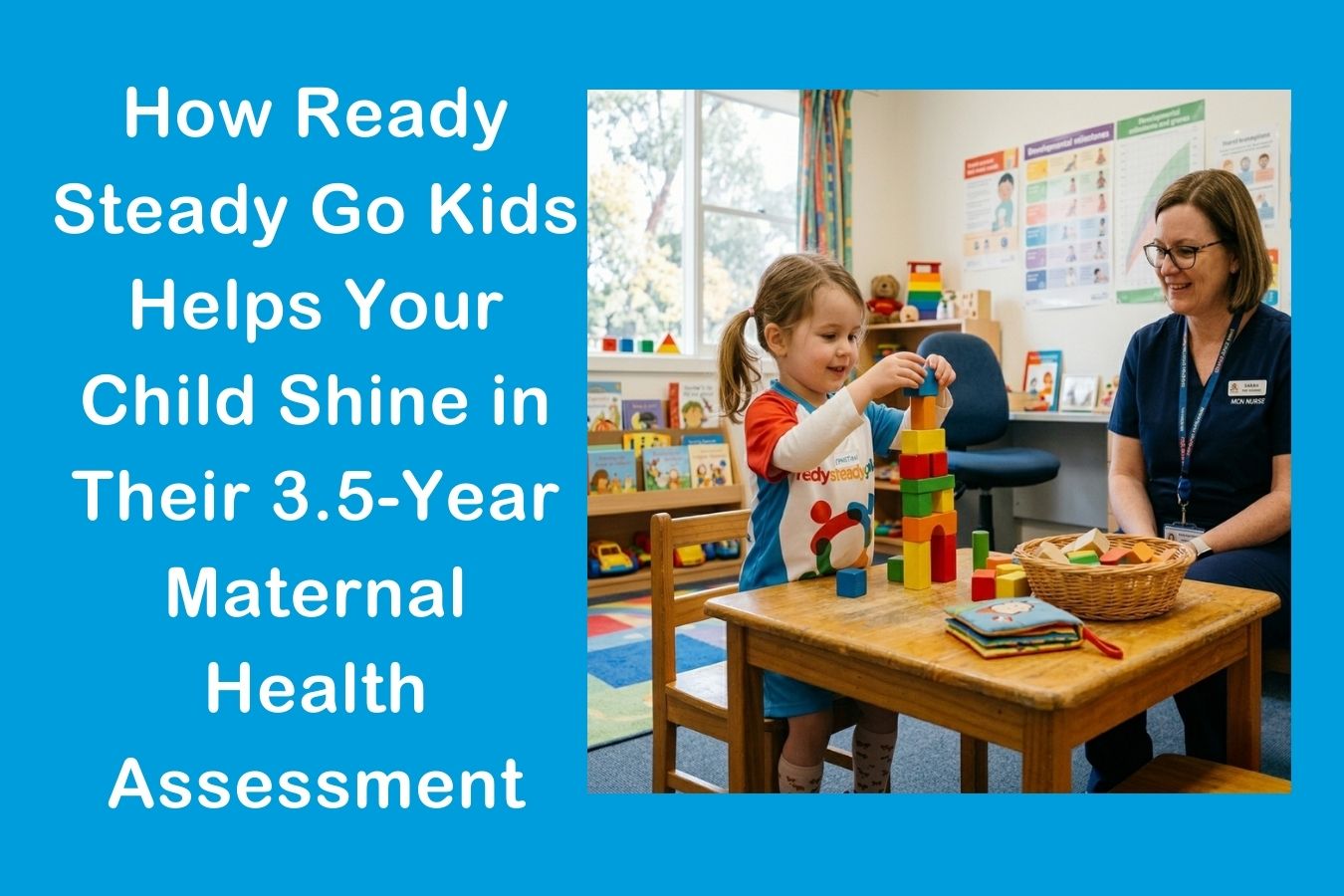
How Ready Steady Go Kids Helps Your Child Shine in Their 3.5-Year Maternal Health Assessment
How Ready Steady Go Kids Helps Your Child Shine in Their 3.5-Year Maternal Health Assessment
That little envelope arrives in the mail and suddenly your heart skips a beat. It's time for your 3.5-year-old's developmental assessment with the Maternal Health nurse. While most parents feel a flutter of nerves wondering if their child will "pass," there's actually a fantastic way to set your little one up for success – and it involves way more fun than you'd expect.
What Happens During the 3.5-Year Assessment?
Every Australian child gets invited for this important developmental check-up around their third birthday. The Maternal Health nurse assesses various areas of development, but two key focuses are gross motor skills (the big movements like running, jumping, and balancing) and fine motor skills (precise movements like drawing, threading, and manipulating small objects).
The assessment isn't about pass or fail – it's about identifying where your child is developmentally and whether they might benefit from additional support. But naturally, every parent wants to see their little one confidently demonstrating their skills.
How Ready Steady Go Kids Builds Gross Motor Confidence
This is where Ready Steady Go Kids truly shines. Our multi-sport classes are specifically designed to develop the exact gross motor skills that Maternal Health nurses look for during assessments.
Balance and Coordination
During the assessment, your child might be asked to balance on one foot, walk along a line, or navigate simple obstacles. In every RSGK class, children practice these skills through fun activities like walking on foam beams, hopping between coloured spots, and navigating obstacle courses. What feels like play to them is actually systematic skill-building.
Ball Skills and Hand-Eye Coordination
Throwing, catching, and kicking are common assessment components. Our classes incorporate tennis, soccer, cricket, and basketball activities using age-appropriate equipment. By 3.5 years, children who've been attending RSGK classes typically show confidence with ball handling that impresses during assessments.
Running, Jumping, and Dynamic Movement
The nurse will observe how your child moves through space – their gait, their ability to start and stop, and their overall body control. Ready Steady Go Kids classes are constantly in motion, helping children develop natural, confident movement patterns through structured play.
Fine Motor Development Through Sport
While you might not immediately connect sports with fine motor skills, Ready Steady Go Kids cleverly incorporates plenty of fine motor development into our programs.
Equipment Handling
Gripping racquets, manipulating small balls, and adjusting equipment helps develop the same hand strength and dexterity that children need for drawing, writing, and self-care tasks that are assessed at 3.5 years.
Following Instructions and Sequencing
Many fine motor assessments involve following multi-step instructions – like "draw a circle, then put a dot inside it." Our classes constantly practice this through sport sequences: "pick up the red ball, carry it to the blue cone, then roll it to me."
Bilateral Coordination
Using both sides of the body together is crucial for fine motor development. Activities like tennis (two hands on racquet), basketball (catching and throwing), and obstacle courses naturally develop this skill.
Beyond Motor Skills: School Readiness Bonus
The 3.5-year assessment also touches on social skills, attention span, and following instructions – all areas where Ready Steady Go Kids excels. Children learn to:
- Listen to coaches and follow directions
- Take turns and share equipment
- Persist when activities are challenging
- Interact positively with other children
- Transition between activities smoothly
These skills often impress Maternal Health nurses and indicate strong school readiness.
The Confidence Factor
Perhaps most importantly, children who attend Ready Steady Go Kids develop genuine confidence in their physical abilities. When assessment time comes, they're not intimidated by requests to jump, balance, or manipulate objects – they've been doing these things for fun in a supportive environment.
This confidence shows. Children who feel capable in their bodies tend to approach new challenges with enthusiasm rather than anxiety, making the entire assessment experience more positive for everyone involved.
Real-World Results
We regularly hear from parents whose children sailed through their developmental assessments after participating in our programs. The combination of systematic skill development and fun, pressure-free practice creates children who are genuinely prepared for what the assessment involves.
Setting Your Child Up for Success
While no parent should stress about their child's developmental assessment, there's something wonderful about knowing you've given them every opportunity to succeed. Ready Steady Go Kids classes provide exactly that – a fun, engaging way to develop the physical skills, confidence, and social abilities that serve children well during assessments and far beyond.
Your 3.5-year-old's assessment appointment doesn't have to be a source of anxiety. With the right preparation through play-based learning, it can become an opportunity for your child to showcase just how capable and confident they've become.
Ready to give your little one the best start? Find your local Ready Steady Go Kids classes at readysteadygokids.com.au and watch them develop skills that will serve them well at assessment time and throughout their school years.