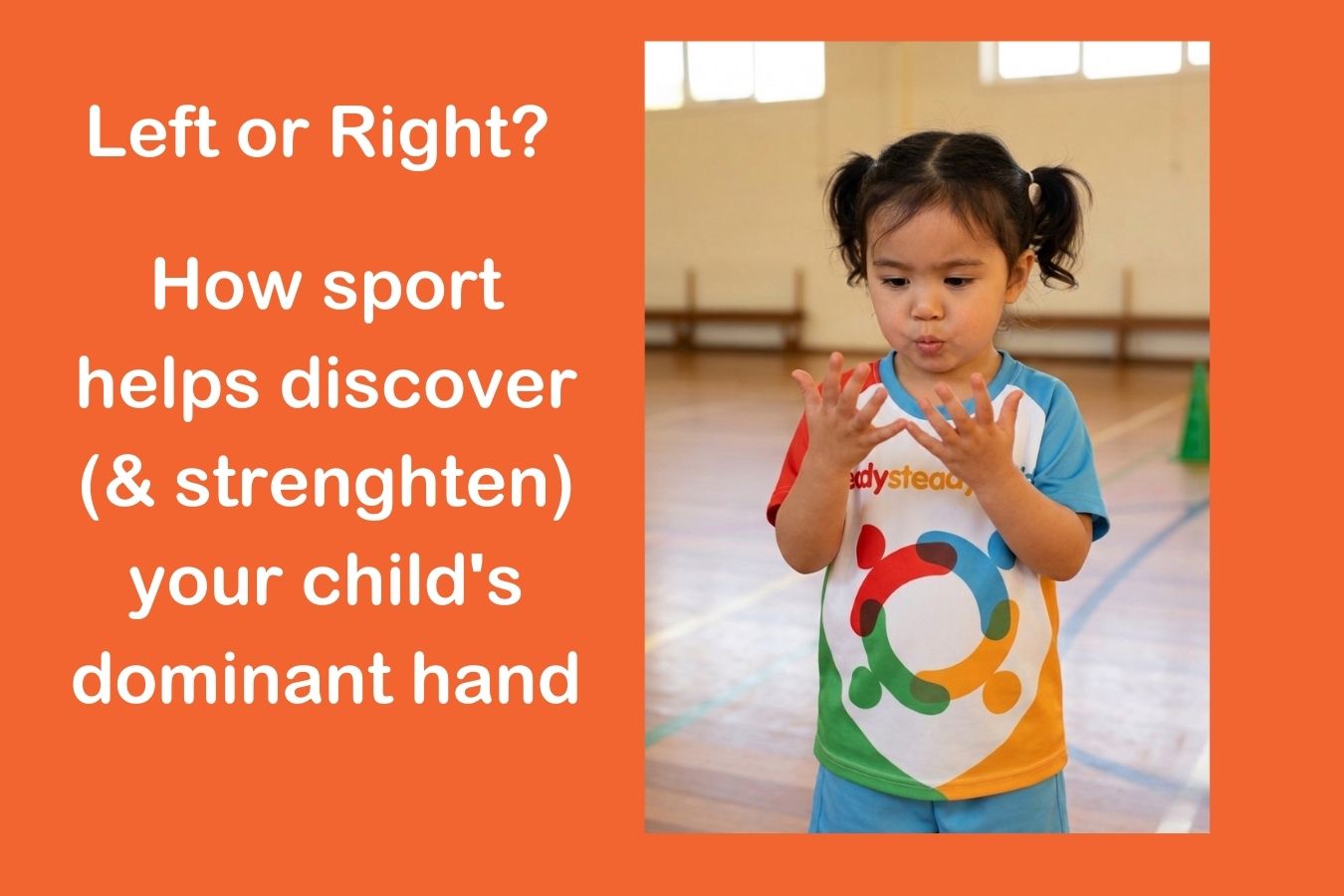
Left or Right? How Sport Helps Discover (and Strengthen) Your Child's Dominant Hand
Left or Right? How Sport Helps Discover (and Strengthen) Your Child's Dominant Hand
You are watching your 3-year-old at their first Ready Steady Go Kids class, and you notice they keep switching hands when throwing the ball. One minute they're using their left hand, the next they're reaching with their right. Sound familiar? Don't worry, you're not alone in wondering when (and if) your little one will finally pick a side!
Meet Carmen Dodds, paediatric occupational therapist and mum of three, who sees this exact scenario play out weekly in her clinic. "Parents often panic when their preschooler seems 'ambidextrous' or constantly switches hands," Carmen explains. "But what they're witnessing is actually a perfectly normal part of development, and sport for preschoolers is one of the best ways to help children naturally discover and strengthen their dominant hand."
When Does Hand Dominance Actually Develop?
Before we dive into how multi-sports activities help, let's address the elephant in the room: when should you expect your child to show a clear hand preference?
"Hand dominance begins emerging around 18 months, but it's not unusual for children to still be figuring it out at 4 or even 5 years old," Carmen reassures. "By kindergarten, most children show a clear preference, and by first grade, dominance is typically well-established."
This timeline means that if your 3-year-old is still switching hands during sports programs, there's absolutely no need to stress.
How Sport Helps Discover Your Child's Natural Preference
Unlike asking your child directly which hand they prefer (spoiler alert: they'll probably just stare at you blankly), sport provide the perfect opportunity to observe their natural choices in action.
"During sport activities, children make instinctive choices without overthinking," Carmen notes. "When a ball is rolling toward them, they don't pause to consider which hand to use, they just react. This gives us the clearest picture of their true preference."
Here's what Carmen suggests watching for during classes:
First Instinct Moments:
- Which hand do they reach with when catching a ball that's thrown unexpectedly?
- When picking up sports equipment, which hand do they naturally use?
- During throwing activities, which hand feels more natural to them?
Consistency Patterns:
- Do they consistently return to the same hand after switching?
- Which hand do they use when they're tired or not thinking about it?
- When demonstrating a new skill, which hand do they choose?
Carmen's tip for frazzled parents: "Don't try to observe everything in one session. You've got enough on your plate! Just watch casually over several weeks, patterns will emerge naturally."
How Multi-Sports Activities Strengthen Dominant Hand
Once children start showing a preference, sports for preschoolers become incredibly valuable for strengthening and confirming that dominance through repetitive, enjoyable practice.
"Think of it like this," Carmen explains. "When your child repeatedly throws a ball with their preferred hand, they're building muscle memory, strength, and coordination that reinforces their natural dominance. It's like the hand is saying, 'Yes, this feels right: I want to keep doing this!'"
The beauty of multi-sports programs is that they offer varied opportunities for hand use:
- Throwing and catching activities build strength and coordination
- Racquet sports require sustained use of one hand
- Ball balancing challenges fine motor control and grip strength
- Aiming games develop precision and consistency
Carmen points out something particularly clever about quality sport programs: "They naturally encourage children to stick with their preferred hand even when fatigue sets in. Unlike drawing or writing where a tired child might switch hands, sport activities often require completion with the same hand: providing the extended practice needed for true dominance to develop."
The Best Sports Activities for Hand Dominance Development
Not all kids sports are created equal when it comes to supporting hand dominance. Carmen shares her top picks for activities that naturally encourage hand preference discovery and strengthening:
Bilateral Coordination Sports:
- Tennis/racquet sports: Require sustained use of dominant hand while non-dominant hand supports body positioning
- T-Ball/cricket: Throwing with dominant hand, fielding coordination
- Basketball: Shooting and dribbling patterns help establish preference
Individual Hand-Focus Activities:
- Ball throwing games: Allow observation of natural throwing preference
- Catching activities: Reveal instinctive reaching patterns
- Racquet balancing: Build sustained coordination and grip strength
Carmen particularly loves how Ready Steady Go Kids classes incorporate all these elements: "The variety means children get multiple opportunities to practice with their preferred hand across different movement patterns. Plus, the fun environment means they're not even thinking about 'hand dominance': they're just playing!"
Supporting Development at Home (Without Adding to Your To-Do List)
The good news? You don't need to become a hand dominance expert or create elaborate home programs. Carmen's advice is beautifully simple:
During Daily Activities:
- Notice which hand your child reaches with during meals, dressing, or play
- Avoid correcting or pushing them toward a particular hand
- Provide opportunities for both gross motor (throwing, catching) and fine motor (drawing, threading) activities
"The most important thing is to follow your child's lead," Carmen advises. "If they're naturally gravitating toward their right hand during sport activities, encourage practice with that hand. If they switch, don't stress: just keep providing opportunities."
When to Relax vs. When to Check In
Carmen's final piece of advice addresses the worry that keeps many parents up at night (along with everything else): "Most children will naturally establish hand dominance through normal play and activity. The beauty of quality multi-sport programs is that they provide rich opportunities for natural development without pressure."
Trust the process, enjoy watching your child discover their capabilities, and remember that whether they end up left-handed, right-handed, or somewhere in between, sport programs are supporting their overall development in countless ways.
As Carmen puts it: "Hand dominance is just one piece of the developmental puzzle. Through multi-sport activities, children are also building confidence, coordination, social skills, and a love of movement that will serve them for life. That's worth celebrating, regardless of which hand they choose to throw with!"
Ready to support your child's natural development through fun, engaging sport programs? Find a Ready Steady Go Kids class near you and watch the magic happen: hand dominance and all.