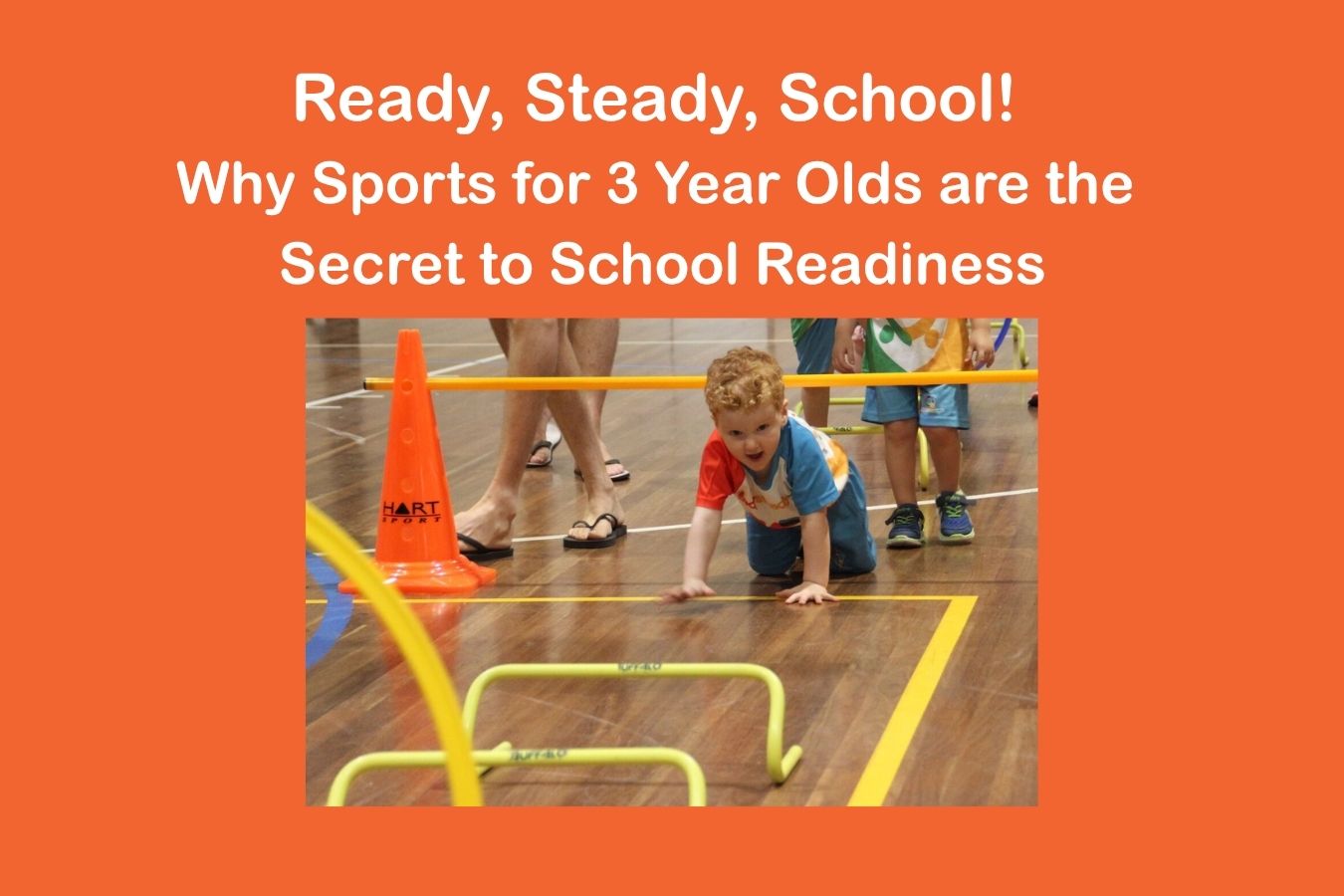
Ready, Steady, School! Why Sports for 3 Year Olds are the Secret to School Readiness
Parenting a three-year-old is often compared to a high-stakes endurance event where the finish line is bedtime and the primary fuel is lukewarm coffee. Between the lack of sleep and the inability to use the toilet without a small audience, most parents are simply trying to survive the day. However, as the preschool years progress, a new challenge appears on the horizon: school readiness. While many families focus on letter recognition or counting, research indicates that physical literacy and gross motor development are equally critical foundations for classroom success. Engaging in structured sports for 3 year olds provides a unique environment where children can develop the physical, social, and cognitive skills necessary for a smooth transition to primary school.
Understanding the physical foundation of learning
The concept of school readiness is frequently misunderstood as a purely academic milestone. In reality, a child's ability to sit still at a desk, hold a pencil, and focus on a teacher is deeply rooted in their physical capabilities. Gross motor development involves the large muscles of the body that enable walking, running, jumping, and maintaining posture. When a child participates in a multi-sport program, they strengthen their core muscles, which are essential for sitting upright in a classroom chair for extended periods. Without sufficient core strength and postural control, children may become physically fatigued, leading to restlessness and a decreased ability to concentrate on cognitive tasks.
The link between movement and cognitive function
Scientific studies have consistently shown that regular physical activity is associated with improved academic outcomes and better brain health. According to research summarised by Project Play, active children demonstrate higher levels of focus and better performance on memory tasks compared to their sedentary peers. This is because movement-based play stimulates the brain and supports the development of executive functions such as working memory and mental flexibility. By introducing sports for 3 year olds early on, parents are not just encouraging physical fitness; they are actively building the neural pathways that will eventually support reading, writing, and problem-solving.
Developing social cues and the ability to follow instructions
A significant part of the school day involves navigating social hierarchies and adhering to a structured routine. For a toddler who is used to being the centre of their own universe, the transition to a group environment can be jarring. Ready Steady Go Kids classes are designed to introduce these concepts in a non-competitive, playful way. Our low coach-to-child ratios ensure that every participant receives personalised attention as they learn to wait their turn and listen to multi-step directions. Following instructions is a skill that must be practised, and a sports field is the perfect place to realise that "stop" means "stop" and "go" means "go." These experiences help children understand that they are part of a larger group, which is a fundamental requirement for the school environment.
The RSGK 10-sport curriculum and gross motor development
Variety is a big deal when you are dealing with a three-year-old whose attention can disappear faster than your chance to drink a hot coffee. The Ready Steady Go Kids program features a 10-sport curriculum that keeps things fresh, active, and exciting while building the foundations needed for school. Children are introduced to Soccer, Tennis, Basketball, Hockey, Golf, AFL, Rugby, T-ball, Cricket, and Athletics in a sentence-based, rotating format that keeps little bodies moving and little minds switched on.
Each sport helps build school readiness in a specific way for three-year-olds. Soccer supports balance, coordination, listening, and body control. Tennis develops tracking skills, timing, and hand-eye coordination. Basketball encourages bouncing, catching, and spatial awareness. Hockey strengthens control, focus, and two-handed coordination. Golf builds patience, precision, and concentration. AFL promotes kicking, marking, and movement planning. Rugby helps with running, agility, and confidence in group play. T-ball supports batting, tracking, and turn-taking. Cricket develops striking skills, catching, and reaction time. Athletics builds jumping, running, balance, and overall body awareness.
By participating in a multi-sport environment, children are not just having a great time. They are also building gross motor strength, following instructions, practising transitions, learning to take turns, and developing the confidence to join in with a group. These are the same practical skills that help three-year-olds manage classroom routines, sit more comfortably, carry their bags, hold posture on the mat, and feel ready to give new tasks a go. This variety keeps sessions upbeat and engaging, while giving children a broad base of fundamental movement skills before they step into the school gate.
Building confidence and resilience through play
School can be an intimidating place for a child who is afraid to try new things or who struggles when they do not succeed immediately. Sports provide a safe space to fail and try again, which is the essence of resilience. When a child finally manages to kick a ball into a goal or balance on a beam after several attempts, they experience a genuine sense of achievement. This builds self-confidence that carries over into the classroom. A child who believes in their physical abilities is more likely to approach academic challenges with a "can-do" attitude. Our trainers focus on positive reinforcement to ensure that every child feels successful, regardless of their current skill level.
The logistical benefits of indoor venues
We understand that for parents, the logistics of extracurricular activities can be a major pain point. Dealing with unpredictable weather or sun safety can turn a fun outing into a stressful ordeal. To mitigate these issues, Ready Steady Go Kids operates primarily in high-quality indoor venues. This ensures that classes proceed regardless of the Australian heat or rain, providing a consistent routine for the children and a comfortable environment for parents. Having a reliable, climate-controlled space allows kids to focus entirely on their skills without the distractions of wind or wet grass, making the experience more productive for everyone involved.
Why three is the magic number for starting sports
While some might think three is too young for "formal" sports, it is actually a brilliant age to start building the fundamental movement skills that support school readiness. At this age, children are rapidly developing their coordination and are highly receptive to learning through imitation, routine, and play. They are also learning how to separate from parents, join in with a group, listen to adults, and move their bodies with more control, which are all very handy skills when school is on the horizon.
Waiting until school starts to address gross motor delays, confidence wobbles, or difficulty following instructions can make the transition much harder for the child. By enrolling in sports for 3 year olds now, you are giving your child a head start by helping them build balance, posture, coordination, focus, resilience, and independence before they enter a classroom. It is practical preparation wrapped up in a fun, high-energy session that feels much more like play than work, which is exactly how learning should look at three.
Practical steps for parents to support school readiness
If you are looking for ways to support your child's development, consider the following structured approach to physical activity. You should prioritise activities that require your child to cross the midline of their body, as this is linked to the brain's ability to coordinate the left and right hemispheres. You may also want to encourage games that involve tracking a moving object with the eyes, which is a direct precursor to reading skills. Finally, ensuring that your child has regular opportunities to interact with their peers in a coached environment will help them learn the social etiquette required for school. You can learn more about the specific developmental milestones we target by visiting our benefits page.
Conclusion: Ready, steady, school!
The journey toward the first day of school does not have to feel so daunting. While you might still be chasing a full night's sleep or trying to finish a coffee while it is still warm, you can feel confident that you are building a strong foundation for your child's future. By focusing on gross motor development, social confidence, and school-readiness skills through a multi-sport program, you are giving your three-year-old practical tools that will help them thrive both on and off the court. Ready Steady Go Kids is here to make that preparation active, upbeat, and genuinely fun, with expert coaching, a lively 10-sport curriculum, and plenty of encouragement along the way.