The Gross Motor Benefits of Our 10 Sports
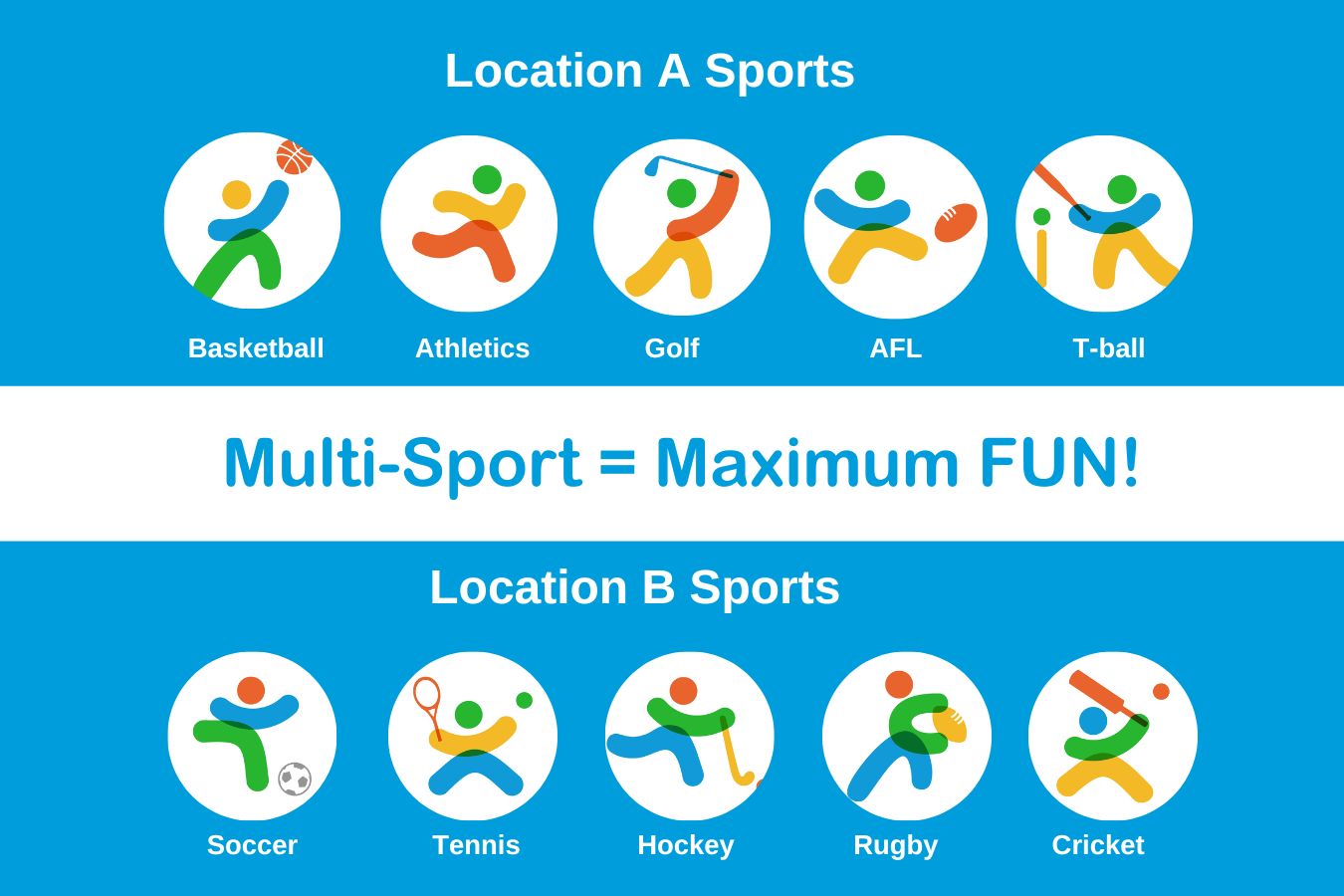
At Ready Steady Go Kids we play 10 sports over 2 terms (5 sports per term), rotating through a different single sport every fortnight. This consistent, repeated practice gives children the opportunity to create pathways to their brain, remember, practice and refine. On the last week of each term, we run a multi-sport week to recap the sports covered throughout the term. This gives children an opportunity to recall and consolidate their skills, ready for the next set of 5 sports the following term. It's a fun week incorporating our Ready Steady Kids characters - Rocket, Speedy, Giggles & Keiko!
Soccer & Basketball: Our Opening Act (Weeks 1 & 2)
Soccer is one of our first sports because kids find
it surprisingly easy to get the hang of. There's something magical about
watching a toddler's face light up when they successfully kick a ball for the
first time! Soccer is fantastic for developing foot-eye coordination – yes,
that's a real thing, just like hand-eye coordination but with feet. As kids
learn to control the ball with their feet, they're building spatial awareness,
understanding where their body is in relation to the ball and other players.
The running, stopping, and changing direction that comes
naturally with soccer builds incredible leg strength and balance. Kids learn to
coordinate their upper and lower body as they run with the ball, developing
core stability that'll serve them well in every aspect of life. Plus, there's
nothing quite like the confidence boost that comes from scoring their first
goal!
Basketball takes coordination to the next level with
its focus on hand-eye coordination and bilateral movement. When kids dribble a
basketball, they're using both sides of their brain and body in perfect harmony
– it's like a workout for their neural pathways! The up-and-down motion of
dribbling strengthens their arms and shoulders while teaching rhythm and
timing.
Shooting hoops introduces trajectory planning – kids learn
to judge distance, aim, and apply the right amount of force. It's physics in
action, but way more fun than it sounds! The jumping involved in basketball
builds explosive leg power and helps with overall body coordination. Every
bounce, every shot, every catch is building stronger, more coordinated little
bodies.
Tennis & Athletics: Precision Meets Power (Weeks 3 & 4)
Tennis might seem advanced for little ones, but it's
actually perfect for developing hand-eye coordination and reaction time. Using
a racquet extends their reach and challenges their spatial awareness in new
ways. Kids learn to track a moving ball, position their body correctly, and
time their swing – it's like a full-brain workout disguised as fun!
The cross-lateral movements in tennis (reaching across their
body) help connect the left and right sides of the brain, supporting cognitive
development alongside physical skills. Tennis also builds incredible focus and
concentration as kids learn to watch the ball and coordinate their movements.
The racquet work strengthens their grip and forearm muscles, setting them up
for better fine motor skills down the track.
Athletics is where kids really discover what their
bodies can do. From running and jumping to throwing, athletics covers all the
fundamental movement skills that form the building blocks for every other
sport. Running develops cardiovascular endurance and leg strength, while
teaching proper posture and stride mechanics.
Jumping activities build explosive power in the legs and
teach kids about timing and coordination. When they're preparing to jump,
landing safely, and maintaining balance, they're developing proprioception –
their body's ability to sense where it is in space. Throwing events work on arm
strength, core rotation, and release timing. It's amazing how many muscle
groups fire up when kids put everything into a big throw!
Golf & Hockey: Precision Sports That Build Focus (Week 5)
Golf introduces kids to precision and control in a
way that's uniquely challenging. The golf swing requires coordination between
arms, torso, and legs, all working together in perfect sequence. Kids learn to
control their power – sometimes you need a gentle putt, sometimes a big drive.
This variety teaches them to modulate their strength and develops incredible
body awareness.
The balance required for a good golf stance strengthens core
muscles and improves overall stability. Golf also teaches patience and
concentration as kids learn to line up their shots and follow through
consistently. The twisting motion of the golf swing enhances spinal mobility
and core strength, while the follow-through motion builds shoulder flexibility.
Hockey with a puck is where things get really
exciting! Using a hockey stick challenges kids' hand-eye coordination in a
completely different way than other sports. They're controlling a puck that
slides along the ground, requiring constant adjustment and quick reflexes. This
builds incredible reaction time and anticipation skills.
The bent-over position required for hockey strengthens the
back and core muscles, while the sweeping motions of stick handling work the
arms and shoulders. Kids learn to control both the speed and direction of the
puck, developing fine motor control within gross motor movements. The quick
directional changes in hockey improve agility and teach kids how to shift their
weight effectively.
AFL & Rugby: Power Sports That Build Confidence (Weeks 6 & 7)
AFL Our Steady & Go kids learn to drop the ball and kick, timing their contact perfectly. This requires different coordination than soccer and develops strong foot-eye coordination and timing skills. AFL brings together so many movement skills that it's like a greatest hits album of gross motor development.
Marking works on hand-eye coordination and bilateral
coordination. The running and dodging movements in AFL build agility and
spatial awareness as kids learn to navigate around obstacles and other players.
Marking builds jumping ability and upper body strength as kids reach up to
secure the ball.
Rugby is fantastic for building overall body strength
and confidence. Carrying the rugby ball while running teaches kids to protect
the ball and maintain balance even when their arms are occupied. This
challenges their core stability and leg strength in unique ways.
The passing in rugby develops shoulder flexibility and core
rotation as kids learn to pass to their teammates. The low body position often
required in rugby when scoring a try strengthens the legs and glutes while
improving balance and stability. Rugby also builds incredible spatial awareness
as kids learn to find gaps and avoid tackles through quick movements and
directional changes.
T-ball & Cricket: Building Batting Champions (Weeks 8 & 9)
T-ball is the perfect introduction to striking
sports, taking the complexity out of a moving ball and letting kids focus
purely on their swing mechanics. The batting motion develops core rotation,
shoulder flexibility, and hand-eye coordination all at once. Kids learn to
track the ball, position their body, and coordinate their swing timing.
The underhand pitching motion in T-ball works on shoulder
stability and teaches kids to control their throwing power and accuracy. Base
running introduces explosive starts, direction changes, and spatial awareness
as kids navigate around the diamond. The throwing and catching aspects of
fielding build overall coordination and reaction time.
Cricket takes batting skills to the next level with
its unique techniques and equipment. Using a cricket bat challenges kids' grip
strength and teaches them different swing patterns than other sports. The
bowling action in cricket is fantastic for shoulder flexibility and core
strength – that distinctive overarm motion works muscles in ways that
complement other throwing sports.
The fielding positions in cricket teach kids to anticipate
where the ball might go and position themselves accordingly. This builds
incredible spatial awareness and strategic thinking alongside physical skills.
The varied pace of cricket – from explosive batting and bowling to patient
fielding – teaches kids to control their energy and focus over longer periods.
The Beautiful Journey of Development
What makes our fortnightly rotation so special is how each
sport builds on the skills developed in the others. The foot-eye coordination
from soccer helps with the leg strength needed for rugby. The hand-eye
coordination from basketball transfers beautifully to cricket batting. The
balance from golf supports the agility needed for AFL.
Every class, your child is building stronger neural
pathways, better coordination, and more confidence in their physical abilities.
They're discovering what their bodies can do while having an absolute blast.
And the best part? They're building a foundation of movement skills that will
serve them well whether they become sports superstars or just kids who love to
move and play.
That's the magic of our multi-sport approach – we're not
just teaching sports, we're building better movers, thinkers, and confident
little humans who know that being active is fun!