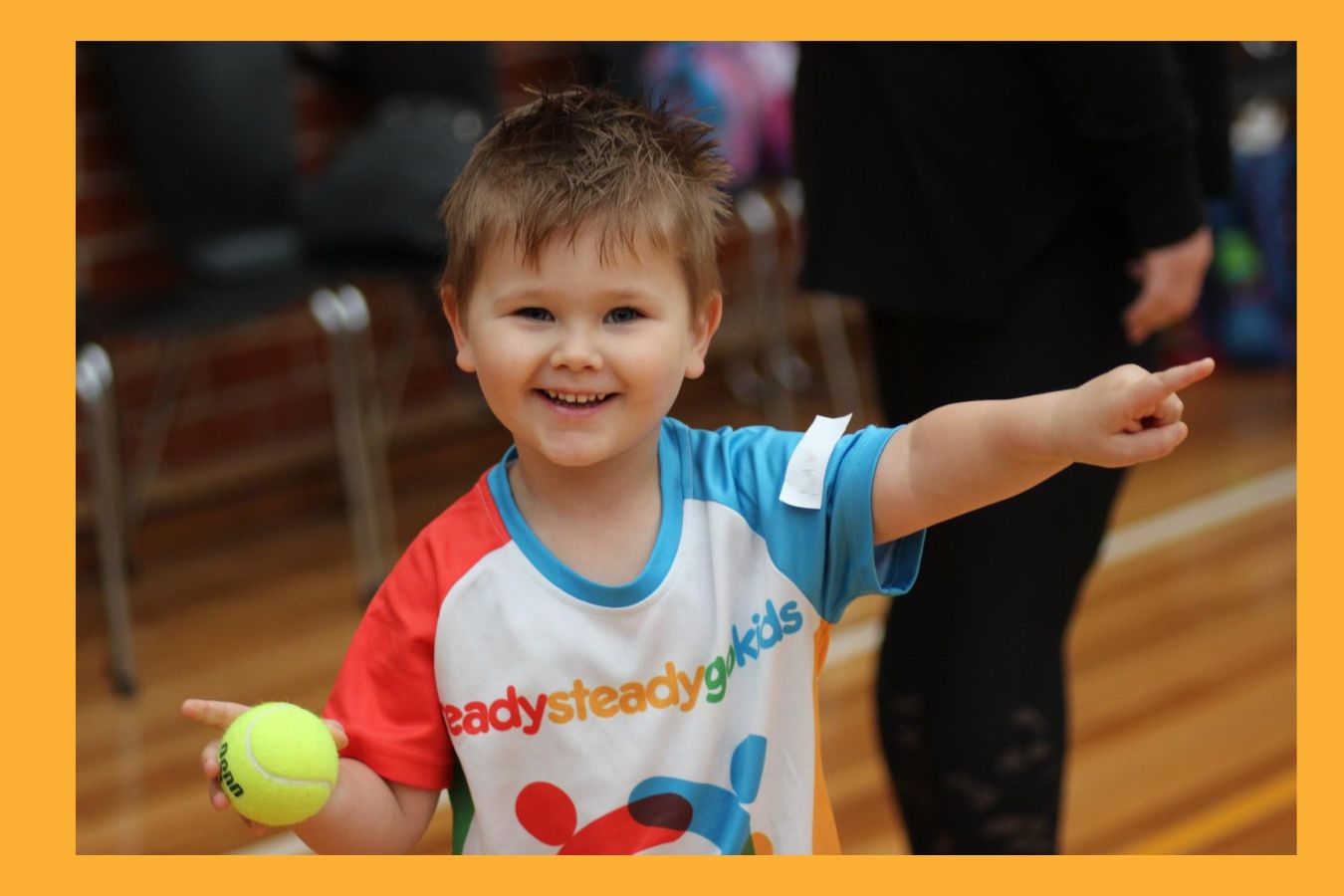
The Science Backed Benefit of Ready Steady Go Kids
Curious about how sport can shape your toddler’s development? You’re not alone. Many parents wonder when to start, what’s age-appropriate, and whether it genuinely supports learning. The short answer: playful, purposefully designed movement in the early years helps build the brain–body connections that support focus, problem-solving and confidence for years to come (see WHO guidelines for children under 5: https://www.who.int/publications/i/item/9789241550536
Ready Steady Go Kids isn't just another activity to keep your child busy. Our program was carefully designed by healthcare professionals who understand exactly how young minds and bodies develop – and how to optimise that development through purposeful play.
The Science Behind Our Program Design
Back in 2004, when most people thought toddler sports meant kicking a ball around randomly, Ready Steady Go Kids was founded by a paediatric physiotherapist who understood something crucial: the early years are when neural pathways form most rapidly, and structured physical activity could supercharge this process.
We recognised the need for these developmental foundations to start earlier than 2.5 years old. Hence, our Get Ready (1.5–2.5yo) program was born.
Fast-forward to 2017, when we realised our youngest participants needed something even more specialised – which is when the Get Ready Program was officially launched, designed specifically by a paediatric Occupational Therapist who continues to oversee our curriculum today. This isn't someone who pops in occasionally – they're actively involved in ensuring our program stays at the cutting edge of child development research.
Why does this professional oversight matter? Because every activity, every progression, and every interaction in our classes is purposefully designed to target specific developmental milestones. We're not just playing games – we're systematically building the foundation for how your child will learn, think, and interact with the world.
Physical Development: Building the Foundation
The physical benefits are the most obvious, but they run much deeper than stronger muscles and better coordination. Research consistently shows that children who engage in structured physical activity during their toddler years develop enhanced gross motor skills, improved balance, and better spatial awareness.
In our classes, when your 18-month-old navigates an obstacle course or your three-year-old learns to catch a ball, they're not just having fun – they're strengthening the neural connections between their brain and body. This mind-body integration becomes the foundation for more complex learning later on.
Studies demonstrate that toddlers who participate in regular physical activity show improved bone density, cardiovascular health, and sleep patterns. But here's what's particularly exciting for parents dealing with challenging behaviour: physical activity naturally regulates emotions by releasing endorphins and reducing stress hormones like cortisol.
Cognitive Development: The Brain-Body Connection
Here's where the science gets really fascinating. When your toddler kicks a ball while running, their brain is simultaneously processing spatial relationships, timing, balance, and decision-making. This type of complex, multi-tasking activity literally grows new neural pathways.
Research published in developmental psychology journals shows that children who participate in "open-skill" sports – activities requiring quick decisions in changing environments – demonstrate enhanced executive function. Executive function includes working memory, cognitive flexibility, and inhibitory control – essentially, the mental skills that help children focus, follow instructions, and solve problems.
In practical terms, this means the toddler learning to navigate an agility ladder while listening to coach instructions is simultaneously developing:
- Working memory (remembering the sequence of movements)
- Cognitive flexibility (adapting when the pattern changes)
- Inhibitory control (not rushing ahead or losing focus)
These are exactly the skills that predict academic success later on. A longitudinal study tracking children from kindergarten through fourth grade found that those who participated in structured sports activities consistently outperformed their peers in classroom tasks requiring concentration and problem-solving.
Social and Emotional Development: The Hidden Curriculum
While you're watching your child learn to throw and catch, they're simultaneously absorbing crucial social and emotional lessons that traditional academic settings simply can't provide in the same way.
Taking turns, sharing equipment, celebrating teammates' successes, and handling disappointment when they don't catch the ball – these experiences build emotional intelligence in real-time. Our paediatric Occupational Therapist designed specific progressions that challenge children just enough to build resilience without overwhelming them.
Research shows that children who participate in group sports activities demonstrate:
- Improved emotional regulation – they're better at managing frustration and excitement
- Enhanced empathy – they learn to read social cues and respond appropriately to others' emotions
- Stronger communication skills – they practice expressing needs, asking for help, and encouraging others
The small class sizes in our program (maximum 16 children, with coach ratios of 1:6 for Get Ready and 1:8 for other classes) ensure each child receives individual attention while still benefiting from group dynamics.
How This Changes Learning Long-Term
The benefits we see in RSGK classes don't stay on the sports field – they transfer directly to academic learning. Children who develop strong gross motor skills in toddlerhood show better fine motor control when they start writing. Those who learn to follow multi-step instructions in our obstacle courses find it easier to follow classroom directions.
But perhaps most importantly, children who experience success and joy in physical challenges develop what psychologists call "mastery motivation" – the internal drive to tackle new challenges. This translates directly to approaching academic tasks with confidence rather than anxiety.
Studies tracking children into their teenage years show that those who participated in structured physical activity as toddlers maintain better focus, demonstrate stronger problem-solving skills, and show greater resilience when facing academic challenges.
The Community Connection: Supporting the Whole Family
Here's something our paediatric professionals recognised early on – supporting child development means supporting parents too. The social connections formed in RSGK classes often become lifelines for parents navigating the isolation that can come with raising young children.
When you're watching your child develop these crucial skills, you're simultaneously connecting with other parents who understand why finding a coffee that's still warm is a small miracle. These relationships often extend beyond class time, creating support networks that benefit entire families.
Research confirms that children whose parents have strong social support networks show better developmental outcomes across all areas – physical, cognitive, and social-emotional. It's not just about what happens during the 45-minute class; it's about the community that forms around it.
The RSGK Difference: Evidence-Based Fun
What sets Ready Steady Go Kids apart isn't just that we make physical activity fun (though we definitely do that!). It's that every aspect of our program is grounded in developmental science while remaining genuinely enjoyable for children.
Our curriculum progression isn't arbitrary – it's designed to match natural developmental stages, ensuring children are challenged appropriately without being overwhelmed. The sports rotation system exposes children to diverse movement patterns, preventing overuse injuries while developing well-rounded motor skills.
The non-competitive environment removes performance anxiety, allowing children to focus on skill development and personal progress. This approach aligns with research showing that intrinsic motivation (enjoying the activity itself) leads to better long-term outcomes than extrinsic motivation (winning or pleasing others).
Ready to give your child this science-backed advantage while connecting with other local families? Book a free trial class at your nearest Ready Steady Go Kids venue. Our expert coaches are excited to show you and your child what developmentally-appropriate sports education looks like in action.