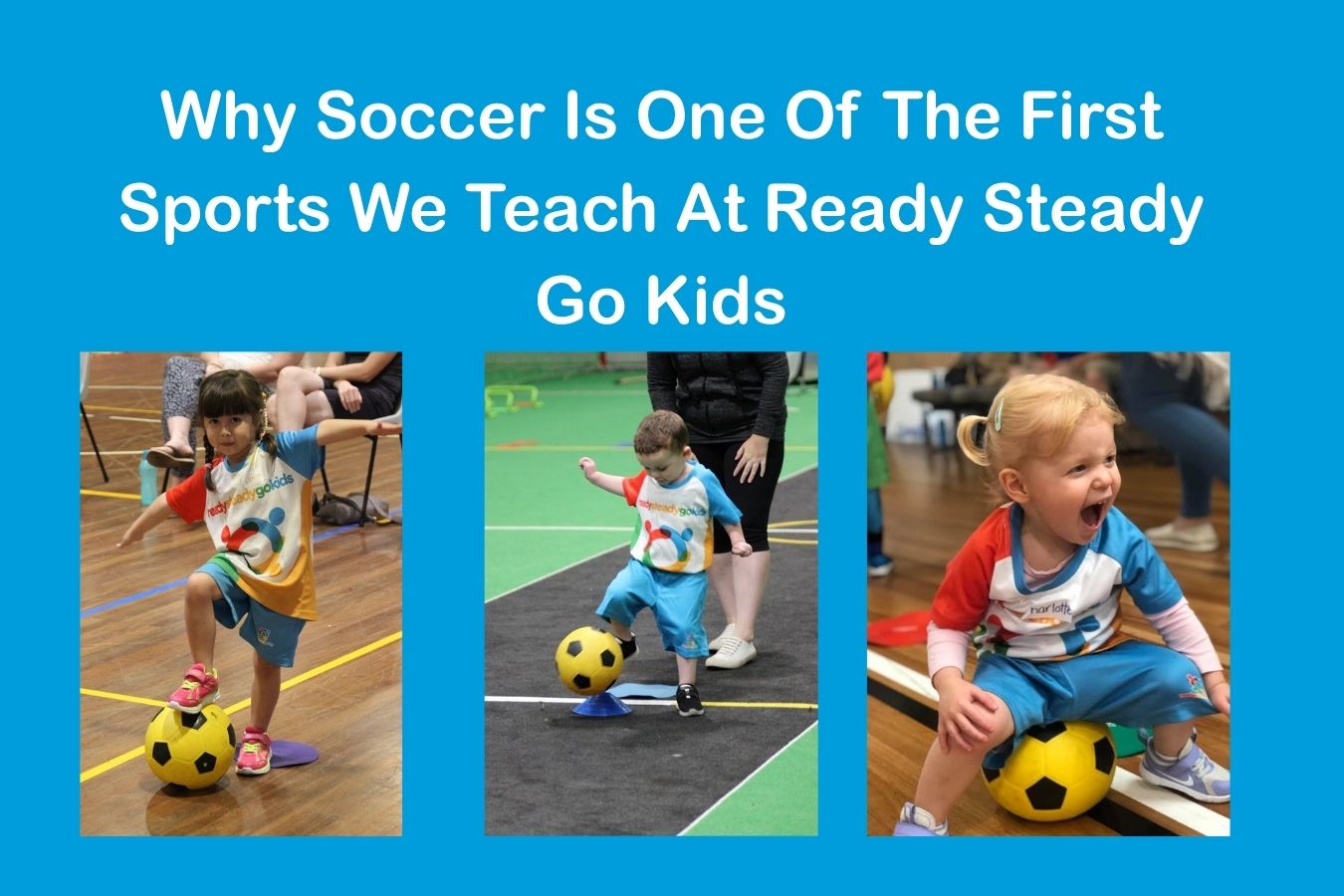
Why Soccer Is One Of The First Sports We Teach At Ready Steady Go Kids
The commencement of a term at Ready Steady Go Kids involves the strategic selection of either soccer or basketball as the primary activity. This procedural choice is based on established observations regarding the efficacy of these sports in fostering child confidence and self-esteem. Soccer, in particular, is utilised due to its accessibility and the high frequency of successful outcomes experienced by participants from the initial session.
A foundational framework for movement, learning, and teamwork is established through soccer. It has been determined that this sport remains one of the most significant components of the curriculum across all developmental age groups. The following sections provide a formal analysis of the physical, social, and cognitive justifications for prioritising soccer in the Ready Steady Go Kids program.
Strategic Justification for Soccer Implementation
The implementation of soccer-based activities is facilitated by the natural inclination of young children toward play-based movement. The game requires participants to engage in a sequence of actions including running, deceleration, directional changes, and balancing. These components serve as essential building blocks for early childhood physical development.
Research indicates that children aged two and above are typically entering a developmental phase where gross motor milestones, such as kicking a ball and jumping, are prioritised. Soccer provides a structured environment where these skills are practised without the perception of repetitive drills. For parents, this ensures that the child is acquiring necessary physical literacies while remaining engaged in the activity.
Accessibility is a primary factor in the selection of soccer. The visual stimulus of a ball moving across a surface generates immediate engagement. Unlike more technically complex sports, the basic mechanics of soccer, tapping, following, and stopping the ball, are easily comprehended by young children. This simplicity prevents the occurrence of cognitive overload, allowing the participant to integrate into the class environment with minimal resistance.
Physical Foundations and Gross Motor Development
Gross motor development is significantly enhanced through the consistent application of soccer skills. The sport necessitates the involvement of the entire body. It has been noted that the act of kicking requires a child to maintain balance on a single limb while executing a purposeful movement with the other. This process strengthens the core and lower extremities.
The following physical benefits have been identified:
- Agility and Balance: The requirement to navigate obstacles and chase a ball promotes postural stability.
- Eye-Foot Coordination: Visual tracking of the ball combined with precise foot placement develops timing and focus.
- Spatial Awareness: Participants must frequently adjust their position in relation to peers, equipment, and the field of play.
The sequence of running toward a ball, decelerating to gain control, and using gentle taps for dribbling builds coordination. Because these movements are integrated into a play-based format, the children continue to exert physical effort without the early onset of mental fatigue. This builds cardiovascular health and fundamental movement skills that are transferable to other sports and daily activities.
Cognitive Progression and Executive Function
The introduction of soccer supports the development of cognitive skills and executive functions. Participants are required to process auditory instructions from the coach and translate them into physical actions. This requires the activation of working memory and attention.
When a child is instructed to wait for a signal before initiating a kick, self-control and inhibitory control are practised. These are critical components of early learning. Furthermore, the sport encourages flexible thinking; as the ball changes direction or a peer moves into their path, the child must rapidly adjust their strategy.
Spatial awareness, a key cognitive-physical crossover, is reinforced. Understanding one’s location in a three-dimensional environment is necessary for safe navigation. Through soccer, children learn to calculate distances and trajectories. These early thinking skills are essential for future academic and social success.
Social Interaction and Parent Community
While the primary focus is on the child's development, Ready Steady Go Kids also functions as a site for social connection among caregivers. It is recognised that parents of toddlers and preschoolers often face challenges related to isolation, lack of sleep, and the exhaustion associated with continuous childcare responsibilities. The need for social interaction and community support, often jokingly referred to in the context of a "need for coffee", is a tangible factor in parental wellbeing.
The classes provide a consistent weekly environment where parents, particularly mums, can meet and establish friendships. The shared experience of watching children participate in soccer fosters a communal atmosphere. This helps to mitigate the loneliness frequently reported by parents of young children.
For the participants, soccer is a tool for socialisation. The following social skills are developed:
- Turn-taking: Waiting for a turn to kick or participate in a drill.
- Listening Skills: Following the directives of the coach within a group setting.
- Teamwork: Recognising the presence of peers and participating in shared objectives, such as scoring a "team goal."
For children who display hesitation in social settings, the presence of the ball provides a concrete focus point. This often reduces the anxiety associated with group participation, allowing the child to engage at their own pace.
Regional Case Studies: Melbourne and Brisbane
Data and anecdotal evidence from various franchises support the continued use of soccer. Jane, a franchisee in Melbourne, has documented numerous instances where children arriving with low levels of confidence showed rapid improvement after engaging with soccer. The immediate success associated with kicking a ball into a goal provides a psychological "win" that encourages future participation.
Similarly, Karl in Brisbane has observed the social dynamics of soccer-based sessions. He noted that the rhythmic nature of dribbling and chasing activities allows new participants to mirror the actions of their peers. This observational learning accelerates the integration process and fosters a sense of belonging within the group. These observations confirm that soccer is an effective catalyst for both individual growth and group cohesion.
Addressing Parental Wellbeing and Pain Points
The program is designed with an awareness of the physical and mental demands placed on parents. It is understood that many caregivers operate under conditions of sleep deprivation and constant demand. The structure of the Ready Steady Go Kids session allows for a period of focused activity that relieves the parent of the need to provide direct entertainment, while still allowing them to remain present and supportive.
The classes offer a reprieve from the domestic environment, where "going to the toilet in peace" is often a luxury. By providing a safe, organised space for children to exert their energy, the program assists in the management of toddler energy levels. This can lead to improved routines and potentially better sleep patterns for both the child and the parent.
Furthermore, the establishment of a "parent community" within the sessions serves to address the pain point of social isolation. Engaging with other adults who share similar challenges provides emotional validation and support.
Conclusion
In conclusion, soccer is prioritised within the Ready Steady Go Kids curriculum because it efficiently addresses physical, cognitive, and social developmental needs. It provides an accessible entry point for children to build confidence and provides a platform for parental connection.
The Ready Steady Go Kids program remains committed to providing high-quality, non-competitive sports instruction for the early childhood demographic.